

Translation gets your words into another language. In-country review – or subject matter expert review – makes sure those words actually work in the market you are targeting. If you are not sure whether your project needs, this guide walks you through it.
SME review, in plain terms
Subject Matter Expert (SME) review is a check performed by someone who champions your market, your industry, or your product. This person might be a regional marketing manager, a compliance officer, an engineer, a doctor, a native speaker on your team. Anyone close enough to the market or the subject matter to know when something is off.
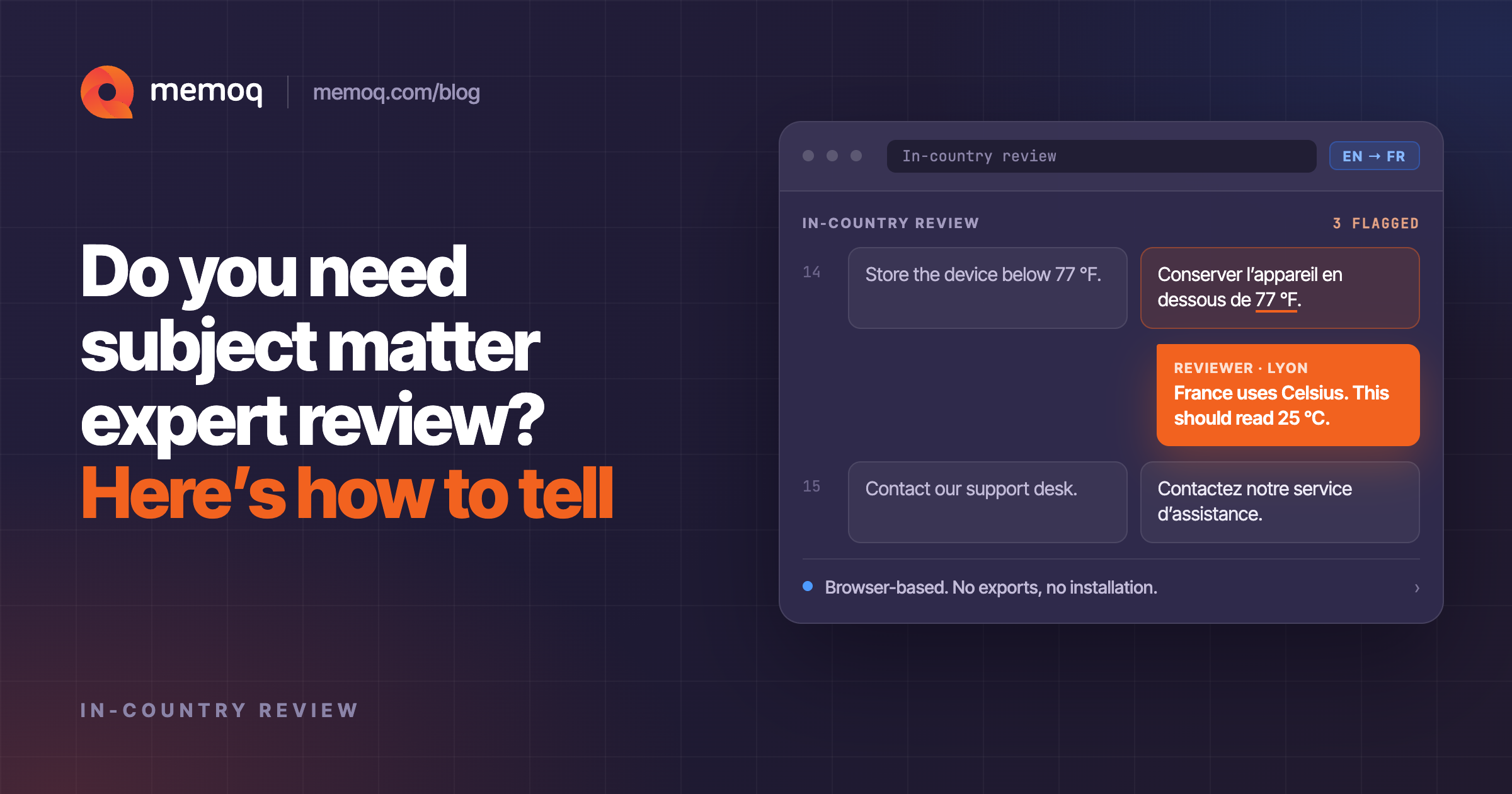
That reviewer reads the finished translation and flags anything that's technically correct but doesn't land: outdated terminology, cultural missteps, measurement units, or phrasing a native speaker would never use.
Unlike your translator, an in-country reviewer doesn't need a linguistics background. They just need to know the market and the subject matter cold.
It's not the same as proofreading
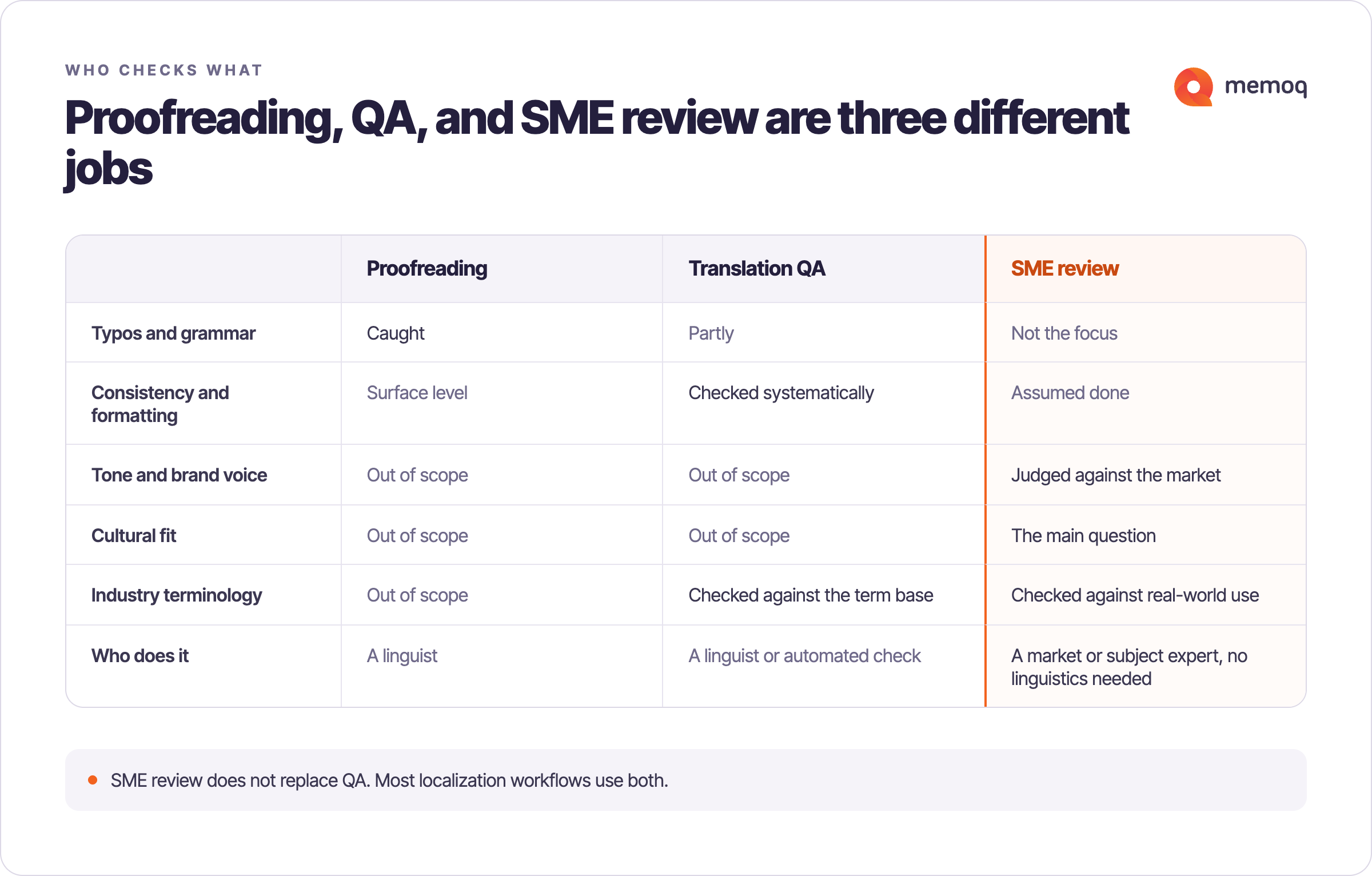
Proofreading catches typos and grammar errors. SME review catches everything a spell checker can't: tone, cultural fit, and whether your regulated industry's exact terminology is right. Think of the review by a non-linguist as a final gut check from someone who lives in the world your content is entering, not a copyedit pass.
When you need it (and when you don't)
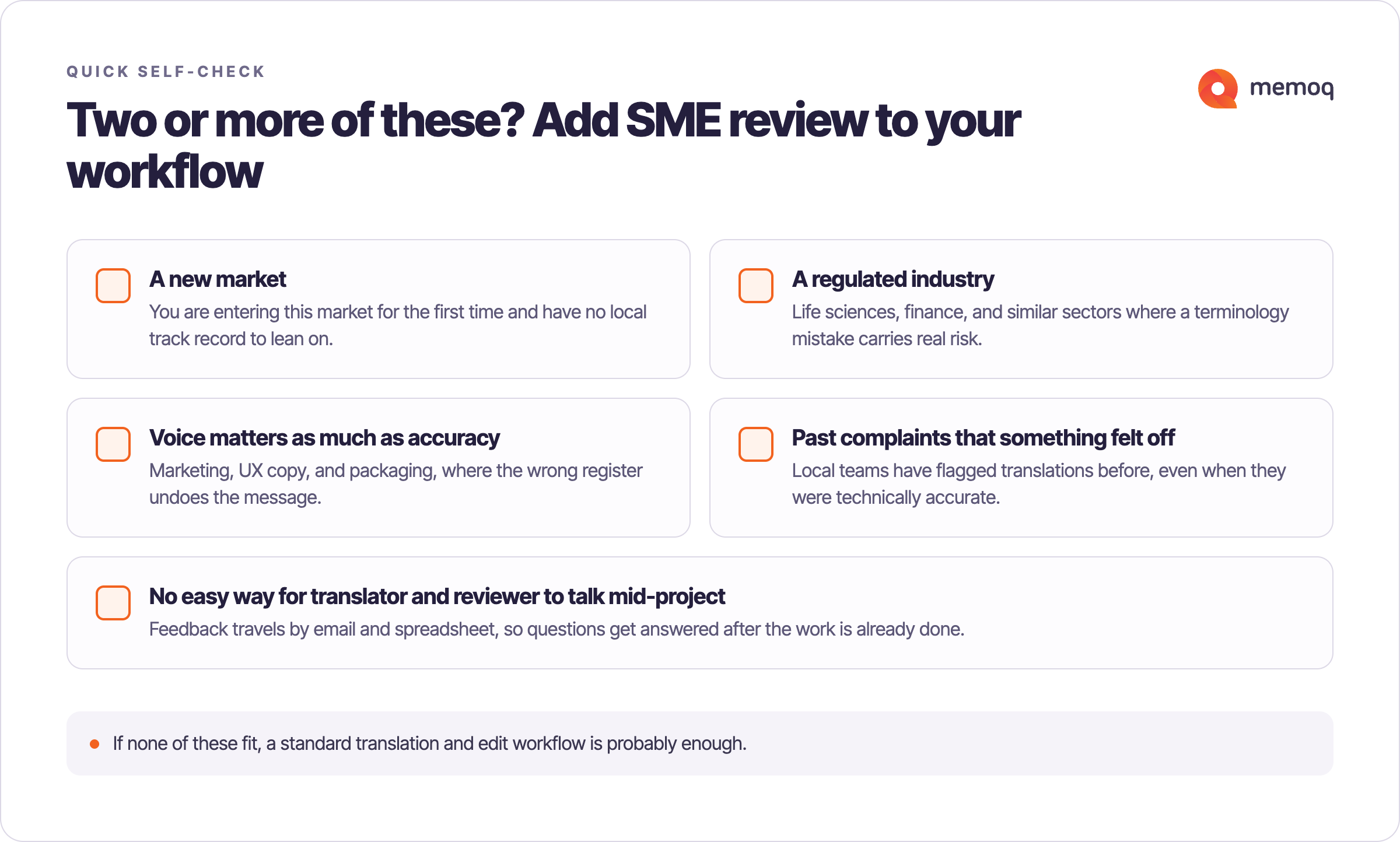
Not every project does. Run through this quick checklist. If two or more apply, add SME review to your workflow.
- You are entering a new market for the first time
- Your content is in a regulated industry, such as life sciences or finance, where terminology mistakes carry real risk
- Your brand voice matters as much as accuracy (marketing, UX copy, packaging)
- You have had local complaints before that a translation felt "off," even when it was technically accurate
- Your translator and reviewer don't have an easy way to communicate mid-project
If none of these fit, a standard translation and edit workflow is probably enough.
Qualities of a strong SME reviewer
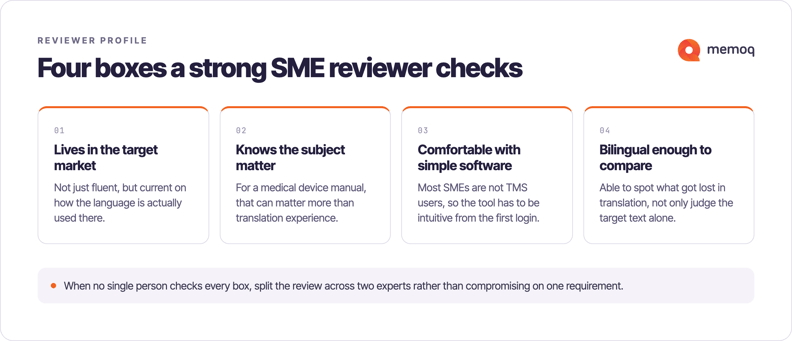
Look for someone who checks most if not all of these boxes:
- Lives in (or is from) the target market. Not just fluent in the language, but current on how it's actually used there.
- Knows the subject matter. For a medical device manual, that might matter more than translation experience.
- Comfortable with simple software. Most SMEs aren't linguists or TMS users by trade, so the tool you hand them needs to be intuitive from the first login.
- Bilingual enough to compare source and target. They should be able to spot when something got lost in translation, not just judge the target text alone.
Sometimes no single person checks every box. In that case, split the review across two experts rather than compromising on any one requirement.
Where memoQ’s In-country review tool fits in
That matters for three reasons:
- No exports. Reviewers work directly in the platform, so there's no document shuffling back and forth and no version-control risk.
- Reviewers get guardrails, not a blank page. Term base entries, non-translatables, and reference files are all built into the interface, so reviewers stay consistent without needing translation training.
- Project managers stay in control. You decide exactly what each reviewer can see and edit, from full editing rights down to comment-only access.
Reviewers just need a link. They can review from any browser, on any device, anywhere they have an internet connection.
Want to see the In-country review tool in action? Check out the full documentation or get in touch with our team.
Frequently asked questions
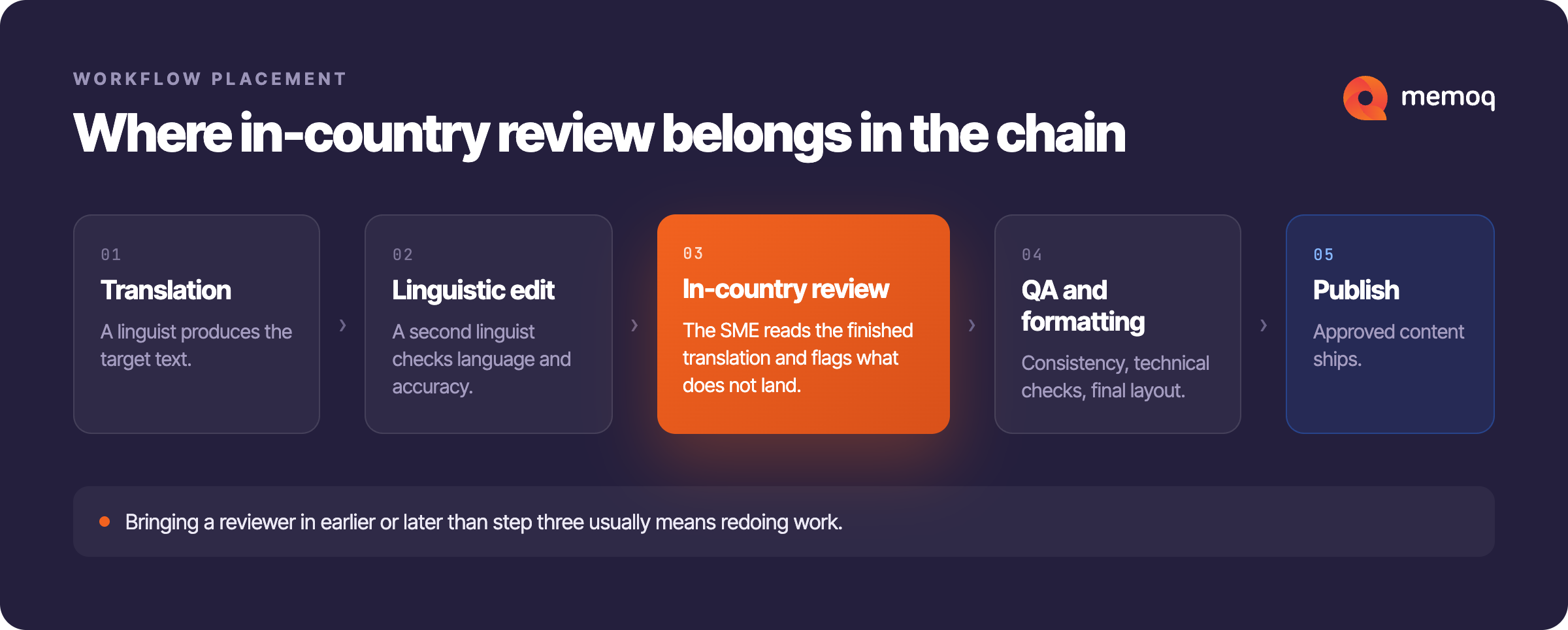
After linguistic edit, before QA, final formatting, and publishing. Bringing a reviewer in earlier or later usually means redoing work.